
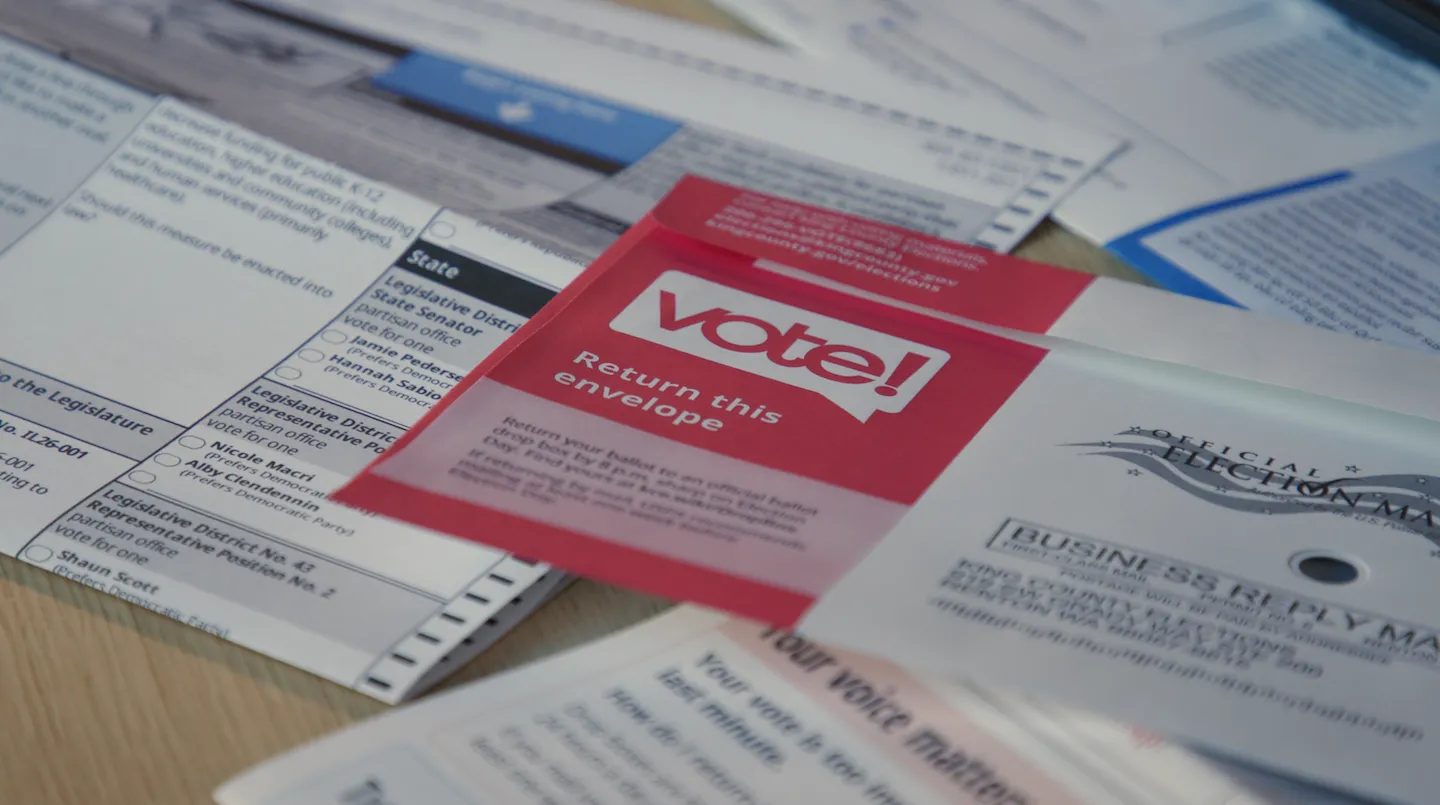

The spending for this year’s election has, so far, stayed on par with past elections, while officials from the agency responsible for oversight say some reporting deadlines can cause issues and announced they cannot enforce a part of the state’s campaign finance laws.
This cycle saw about $140 million spent on candidates and issues in Washington. The majority came from political committees, which spent $105 million
“These are so far incomplete numbers,” Deputy Director for the WA Public Disclosure Commission Kim Bradford said. “There will be more after the election because we're in a period right now where there's no reporting of expenditure activity in that last week before the election. Once we get those post-election reports in December, we'll know the totality of what was spent.”
Based on those year-end reports from previous years, this year’s spending was substantially lower than the last election – at about half the spending – but it’s on par with the last midterms which saw about $140 million in spending.
The agency gets those numbers from the campaigns themselves in reports required before and after the election, including reports 21 days and 7 days from the election, but officials say those reporting deadlines cause issues.
“For a number of years the commission has been discussing what we've come to call “the dark period,” Bradford said. “That is the period between September 1st and about middle of October. So, three weeks before an election, a 21 day expenditure report is due, and that report, drops right before usually mail-in ballots go out. So there's just a few days for the public and for journalists to make sense of the information that is disclosed on those reports.”
Bradford added that the timeline was even more limited this year.
“This year, actually, that report came in after some counties had started sending out their mail-in ballots, so there are voters who probably voted before that information was even available,” she said.
Bradford says this gives the public limited time to understand the reports and can also be confusing and hard to navigate for smaller campaigns. The office is requesting legislation this year to change the requirements to help address that. The expenditure reports would instead be due on the 10th and 25th of each month up to the election.
The Public Disclosure Commission also made headlines recently for an announcement in the weeks leading up to the election.
"The commissioners decided to issue formal guidance to PDC staff to not enforce one section of our law,” Bradford said.
That section relates to campaign donations in the 21 days leading up to the election, but the commission said they could not enforce the law because it may be unconstitutional.
“In 2011, there was a Ninth Circuit decision that struck down a part of the law as it applied to ballot measures, and under the reasoning of that decision, there is concern that the law, the 21-day special limits, are not enforceable at all,” she said.
But, as Bradford notes, that doesn’t affect overall contribution limits.
“When we're talking about the special pre-election limits, what we've seen a lot of concern about out there is this is affecting the big ballot measure races. They've not been subject to that law for years,” she said. “Its also not affecting the contribution limits that apply 365 days a year and how much a candidate themselves can accept.”
“Washingtonians can still be proud of the contribution limits that they have in place,” she added.
