
Presented by Pemco Insurance
As the final bell rings and students spill out of classrooms into the wonders of summer break, one question is on many parents' minds. How do we keep kids reading when the school year is over?
Across Washington, schools, libraries, and community programs respond to that question in many different ways. For some children, the answer is simply a stack of graphic novels. For others, it is story time at their local library, or a summer reading tracker covered in stickers.
Finding what sparks young readers’ interest is key because reading competence cannot be built by obligation alone. Like many skills, reading grows through access, practice, confidence, and maybe most importantly, finding something worth turning the page for.
Where reading stands
Washington students are still testing below pre-pandemic levels for reading proficiency. According to the Washington Office of Superintendent of Public Instruction (OSPI), 79% of Washington students achieved foundational grade-level reading knowledge in 2017-18. That dropped to 67.8% in 2020-21 and has risen over the past several years to 70.9% in 2024-25. Proficiency has grown since the days of at-home learning, but it remains below the state’s pre-pandemic level.
For Kathleen Vasquez, K-12 literacy and social studies program manager for Seattle Public Schools, the concern is not only that reading scores fell, but how slowly they have moved since.
“We’ve been kind of stagnant,” Vasquez said. “I think we’re fortunate in that we haven’t had huge dips. We’re just stagnant. But stagnant isn’t good enough, right?”
Seattle Public Schools are still a strong literacy environment, Vasquez noted, but even strong systems can have students who are not getting what they need.
“We’re fortunate that in reading, we come from one of the most literate cities in the nation,” she said. “And yet we still have 30-plus percent of students not meeting standards or not meeting proficiency. So, on the outside, it might look okay, but we still don’t think that’s good enough.”
Early reading matters
Vasquez highlighted the importance of reading education in the early grades, specifically from kindergarten to second grade. During this time, students are discovering the fundamentals of reading, such as how sounds correspond to letters, how letters form words, and how those words begin to convey meaning.
By third grade, Vasquez said, the purpose of reading begins to shift. Students are no longer only learning how to read. They are expected to use reading to understand science, social studies, and other subjects. Reading is the foundation of all other learning. Without literacy, students cannot fully grasp any other subject.
“Once you get to third grade, the curriculum stops teaching how to read and focuses on what you’re reading, the content, the information you’re receiving,” Vasquez said.
Students missed lessons, but they also missed regular classroom conversations that help them make sense of what they are reading. This loss of in-person interaction may have contributed to the widespread learning disruption seen across subjects.
“We think reading is social,” Vasquez said. “When you teach reading in a classroom, it is very social.”
Seattle Public Schools have since begun preparing to shift parts of their early reading approach. Vasquez said that next year the district is moving toward a new curriculum that gives students more shared instruction while still providing support for anyone who needs extra help. Previously, students were split up by reading level for a large portion of lesson time. Those groups were meant to meet students where they were, but the district’s reading numbers remained stagnant.
“Evidence-based research is telling us that we need to not do that anymore. The new approach is a whole group [with] differentiated lessons,” she said.
Whole-group instruction ensures everyone learns more equitably regardless of where they start the school year. Smaller groups with lessons further tailored to individual levels are still part of the plan, but they’re not the main focus. The new approach, she said, gives students greater access to grade-level content. Adjustments to the curriculum also emphasize physical materials over screens, hand-written annotations, and integrated reading and writing, which Vasquez highlighted as a critical activity for comprehensive learning.
Educators are also learning more about the science of reading and how the brain processes literacy. Students who struggle might need clearer routines, more repetition, and more frequent chances for teachers to check whether a skill has stuck.
“We’ve gotten smarter about teaching reading and the brain research behind it,” Vasquez said.
This science-backed approach to teaching reading will be implemented alongside professional development training in The Science of Reading, a program Vasquez said is “designed to help teachers understand how the brain works and why teaching students in a way where there is a clear scope…and multiple opportunities for reinforcement is critical.”
Support beyond the school day
To promote flourishing literacy in Washington state, students benefit from numerous initiatives and community resources after school and through the summer months.
Local programs like Team Read, which pairs young readers with trained teen reading coaches across four Washington districts, help fill the space when students are not in the classroom. This provides one-on-one support they may not otherwise receive.
“Without practice, it’s easy for [students] to slide back in the progress they attained during the school year. Summer tutoring sessions prepare students to pick up where they left off, often with some growth,” shared Jeanette Eisenberg, program director at Team Read.
Trent Haaker, Seattle project coordinator at Team Read, said young readers need practice, encouragement, and confidence, not just more assignments.
“Many have strong fluency for their age and can read words accurately and smoothly but have not developed comprehension for what they are reading,” Haaker said.
Letting students choose what they engage with also matters.
“Student choice in what texts they are reading is critical to buy-in,” Haaker said. “Allow early readers to find joy in reading as well, finding what they like and hopefully leading to more individual time spent reading.”
Team Read gives younger students a chance to read with older peers who cheer them on, and the relationship gained from this dynamic can have a profound impact. Haaker said students build connections with teen mentors that go beyond academics and support personal growth. That rapport can shift the experience of reading practice from a mandatory chore to an activity kids can enjoy with someone beside them, offering encouragement and opportunity for deeper comprehension.
Like Team Read, many community programs work toward the same goal of a more literate Washington. The Washington Reading Corps, a partnership between OSPI and the Washington Service Corps, helps schools and community groups support young readers through tutoring, kindergarten-readiness work, and family literacy events.
Prime Time Family Reading, which is run through Humanities Washington, brings families together for six weekly sessions centered on meals, stories, and discussion. During the traveling statewide meetups, 15 to 25 families gather to share food, thoughts, and a love of reading.
Imagination Library of Washington focuses even earlier, mailing free books to children five and under to help families build home libraries before kindergarten. The program, which is a local affiliate of Dolly Parton’s Imagination Library, supports the international initiative that has inspired young readers around the world.
Together, these demonstrate that literacy support is not only a school-day responsibility. It also thrives in libraries, community centers, after-school programs, and at home.
Regardless of which programs students engage with, encouraging summer reading does not have to be complicated, Vasquez noted: read daily, and follow their interests.
“You’ve got to figure out what kids really want more information about,” Vasquez said.
She points families back to libraries.
“Utilize those librarians,” Vasquez said. “They are brilliant.”
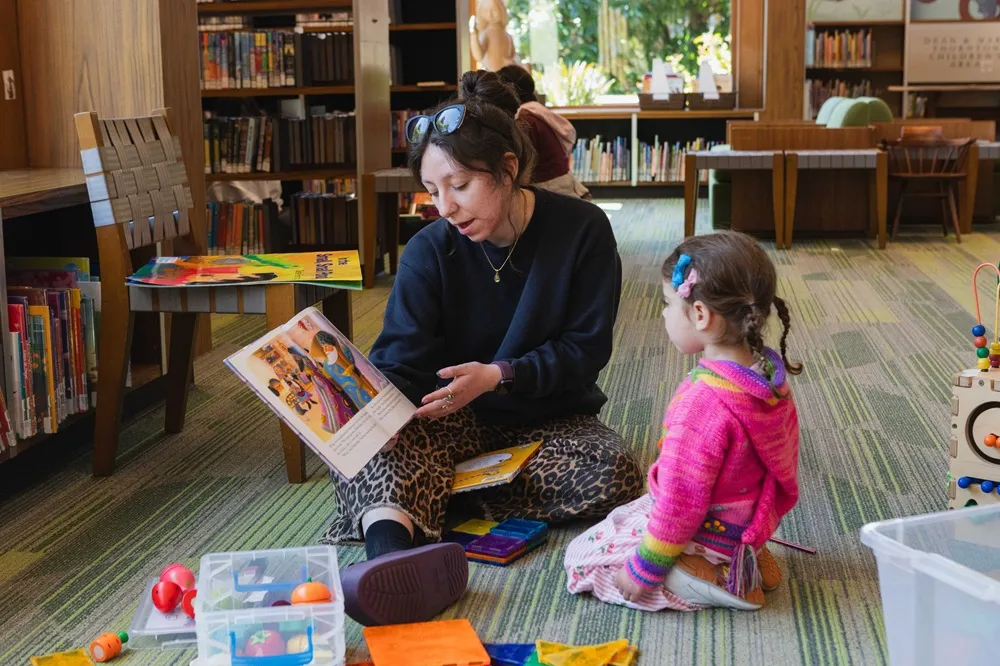
To further embrace summer reading at home, librarians often encourage children, especially reluctant readers, to try comics and graphic novels, said Elisa Murray, who is the digital communications strategist for Seattle Public Library.
“Many parents ask if comics and graphic novels ‘count’ as reading, and we assure you that they 100% do!” Murray said.
Like Haaker, she said families should be open to what works for their reader.
“In general, we encourage parents to follow their children’s lead and let them read what they want in terms of formats and topics,” Murray said.
Audiobooks can be a great option too, and Vasquez added that they can be even more engaging when students also have the text in front of them and can follow along as they listen, where applicable.
The library is sticking to summer reading
Haaker said summer reading is not always about dramatic growth. Sometimes it’s about making sure students do not lose the progress they made during the school year.
“Summer reading is less about making gains and more about maintaining momentum from what was learned and practiced during the school year,” he said.
For the Seattle Public Library, that idea is built into a long history of summer reading support. In 1919, the library started a summer reading program for kids. In 2012, it rebranded the program as Summer of Learning. This year, the library is once again updating its summer offerings with Summer Quest, an all-ages reading and learning program launching on June 15.
Murray said Summer Quest will include activity trackers for kids, teens, and adults, with different experiences to encourage participants to “Read,” “Do,” and “Go.” The trackers will be available in print and online in multiple languages, and library programs are free and open to the public.
“For kids, the focus is on encouraging reading and literacy skill building, to help children combat summer slide and discover new interests and the joy of learning,” Murray said.
Seattle Public Library’s activity tracker identifies five types of literacy-building activities: sing, talk, read, write, and play. Activities may include reading 20 minutes a day, singing a silly song, exploring a new part of the city, or attending a library program. The goal is not only to read a certain number of books, but to combine reading with curiosity, family routines, and community.
“We encourage Summer Questers of all ages to come to the library and connect to our resources and programs, and to build and enjoy community,” Murray said.
While the library has lots of options for readers to engage with over the summer, there are still varying barriers for children and families that might make it hard to access these.
“It’s worth noting that even in a highly literate city like Seattle, which supports a large public library system with 27 locations, access to books is inequitable,” Murray said. “It can be a hardship for some families to make it to the library, much less purchase books.”
To help address that, Seattle Public Library works to bring books and programs beyond library walls. Last summer, Murray said, the library worked with community partners to distribute 9,000 books to children and families with access barriers.
It’s this dedication to fostering engagement and providing resources that will allow all Washington students to reach new literary heights.
Back to school
Once the unhurried days of summer end and students return to classrooms across the state, we can look to the future with hope and renewed energy.
“Every day there are small moments that make huge impacts, a student reading their poem in front of the class, bringing a new book home to read to their parents, finding confidence in themselves both academically and personally,” Haaker said.
Vasquez is excited to continue implementing new techniques as educators are learning more about how reading works and how to teach it better.
“I’m hopeful that we are getting smarter about how to teach kids to read and that smartness is going to be embedded in our new curriculum,” she said.
What matters most is that reading stays within reach every month of the year. Washington’s schools, public libraries, and educators are committed to making that possible; not as another assignment waiting for September, but as something easy enough to start, welcoming enough to try, and worth coming back to.
Presented by Pemco Insurance
About PEMCO Mutual Insurance
PEMCO Mutual Insurance has been serving the Pacific Northwest for 75 years. PEMCO provides auto, home, renters, and boat coverage. We are honored to have been recognized as a Best American Insurance Company by Forbes Magazine based on customer feedback and as one of America's Greatest Midsize Workplaces 2025 by Newsweek. We distinguish ourselves through award-winning customer service, industry expertise, and social impact programs focused on supporting youth and education; community impact programs that build a safer, stronger Pacific Northwest. To learn more, visit www.pemco.com.