


Hi everyone,
Unless you live under a rock, you are aware that the men’s World Cup is currently happening in Seattle (and across the United States, Mexico and Canada). I have complicated feelings about global events like the World Cup, the Olympics, etc.
This story is adapted from the Out & Back newsletter. If you’re not a subscriber, you can sign up here.
On the one hand, I am profoundly moved by the stories of the teams and individuals competing. For example, Vozinha, the goalie from Cape Verde, is a 40-year-old electrician and bus driver by day, and world-class athlete by night — what an incredible human! But on the other hand, I am deeply aware of how these events not only expose inequities but create and compound them. Furthermore, I’ve experienced a lot of cognitive dissonance reading the language FIFA uses to promote the men’s World Cup, preaching unity and asking to remain "apolitical" despite the very premise of the event being rooted in politics — the concept of borders and countries is nothing but imperialist politics in action, after all.
Events like these also expose my complicated feelings about my own identity. I was born in New York and grew up in New Jersey but, as a first generation American, I’ve always felt a deep connection to my parents’ home countries of Haiti and Colombia. And so, when it comes down to what teams I root for, I always pick Colombia and Haiti over the United States. For me, Haiti was one of the biggest stories of this World Cup. Haiti qualified for the World Cup this year for the first time since their men’s World Cup debut in 1974, 52 years ago.
Haiti, formerly the French colony of Saint-Domingue, was once the richest and most profitable colony in the world due to its brutal, slave-driven sugar and coffee production. In 1804, Haiti gained its independence, defiantly kicking out the French and establishing the first Black republic and the first nation in the Western Hemisphere to permanently abolish slavery. In so doing, Haiti became the first example of true international human rights. The country has been paying the price for that freedom ever since — both in actual money, paying France back for their own independence — and in policies and politics of extraction on the part of the United States and other world powers.
And so, it was historically fitting that Haiti’s heroic efforts this year in the World Cup were followed by this news:
The US Supreme Court gave President Donald Trump the green light to end the legal status for potentially millions of foreign nationals who hail from conflict-hit countries like Haiti and Syria. The decision over what’s known as Temporary Protected Status (TPS) means more than 350,000 Haitians could lose their work authorizations and ability to remain in the country, unless they become eligible for some other form of protection. (CNN)
These politics of cruelty on the part of the United States re: Haiti are neither new nor particularly novel, however quite illuminating as to how much Haiti and Haitians continue to be punished for claiming their freedom and disrupting capitalism.
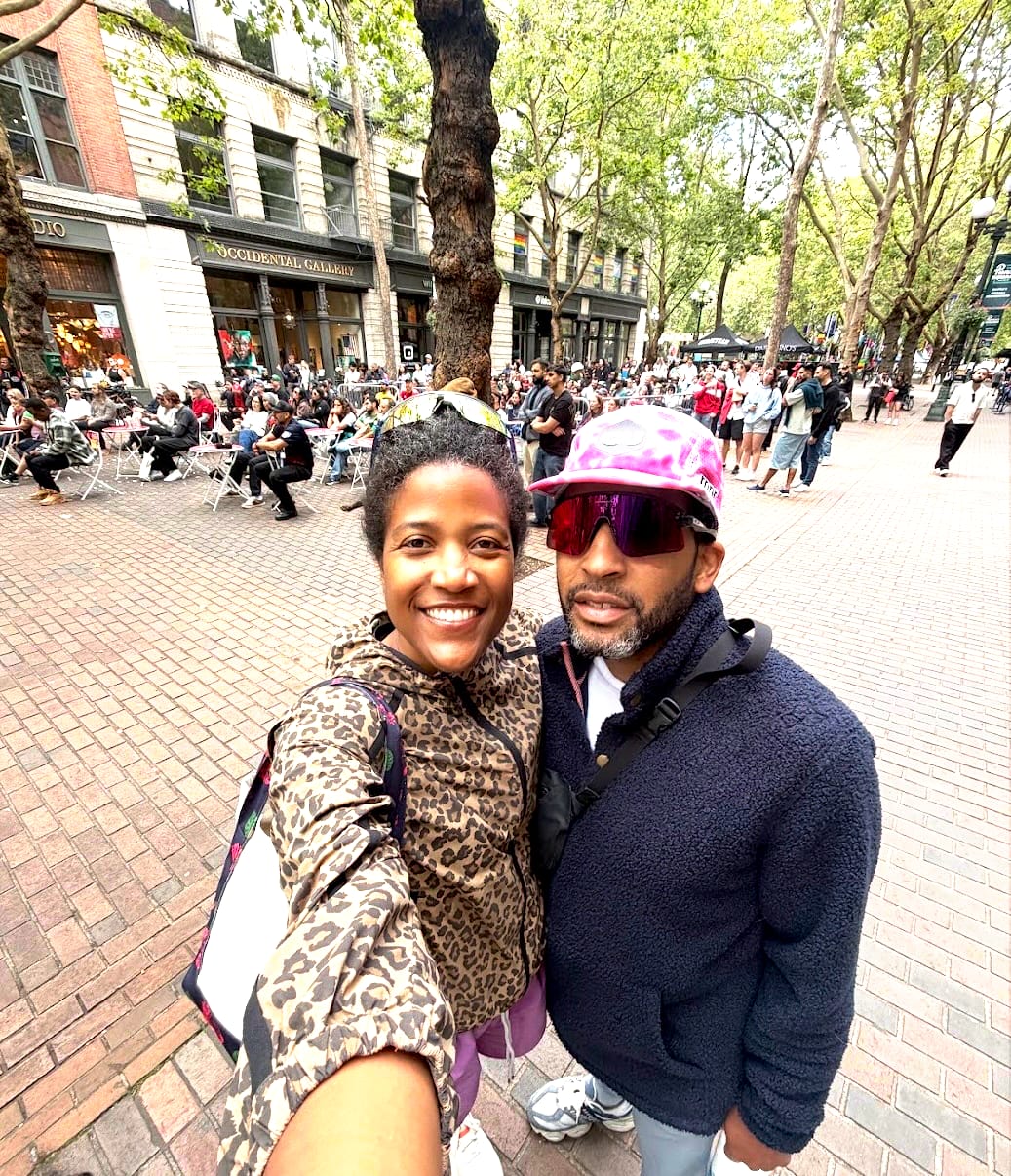
Despite being acutely aware of the often-painful realities surrounding the people and nations participating (myself included), I am also aware of the pride and meaning that participating in the World Cup brings, and I was able to experience this joy as well. I even made it down to Pioneer Square to experience some of the action in person; there is nothing quite like when the energy erupts from the hundreds of people cheering when a team makes a goal!
Behind the Scenes
Last year at this time, I was filming Season 4, episode 2: Held by the Land, featuring Ashleigh Shoecraft. People often wonder how we film the activities, and this one required quite a bit of creativity and logistics, including finding a person with a motorless boat. Here we are paddleboarding on the Puget Sound with Bryce and Skyler just inches away filming it all!
Ashleigh Shoecraft is the founder and executive director of Braided Seeds. Braided Seeds’ mission is to cultivate opportunities for rest, healing, and reconnection to land and nature for communities historically excluded from outdoor spaces.

Recap
I recently visited the Seattle Black Panther Party Interpretive Center, which opened on June 12th. From the Interpretive Center's website:
"The Seattle Black Panther Party Interpretive Center honors the groundbreaking Seattle chapter — the first chapter of the Black Panther Party based outside of California, and the second overall chapter after the Los Angeles chapter. The Seattle chapter was founded in April 1968. "
I was able to check out the inaugural exhibition, which "traces the Seattle chapter’s story — from Aaron and Elmer Dixon’s founding in 1968 to the survival programs that reshaped the city.” I highly recommend checking it out!
Get Outdoors: Upcoming events
- Samish Island Nature and Adventure Camp Retreat – July 9-13 in Bow, Washington. This intergenerational sleepover camp is BIPOC-led and BIPOC-centered and aims to create a space where the intersection of culture and nature is celebrated. You can register here.
- PNW Family Funday: Fit Melanin Summer – July 11 at Pier 58. This wellness- and movement-focused event features free fitness classes, BIPOC vendors, art activities, field games and family fun, live performances, free water and snacks, community resources and music. You can register here.
- Summer Trail Run w/ the Seattle Running Collective and Teva - July 12th at Carkeek Park. Join the Seattle Running Collective for another trail run supported by Teva! This is the perfect opportunity to experience the trails in a warm and welcoming environment, no matter your pace or ability. The trail will be moderately difficult so please keep that in mind in deciding your pace (and leave the kiddos at home or have a friend watch them at the playground). Trail shoes with proper grip are recommended; if you do not own a pair, Teva is offering shoe trials!
- All-City Mile – July 18 at Shoreline Stadium. Join CSRD and Athletic Form at the UW Husky Track for a community-driven celebration of running. The All-City Mile brings together people of all ages and abilities, united by the love of movement. The event aims to break the fear of the track and reclaim the mile as a symbol of fun, challenge and togetherness. There will be multiple heats throughout the entire morning for any pace, as well as a kids’ dash and a mystery closing track event. Official registration is here.
