


We all know what a pirate is. We’ve seen swashbuckling movies, watched Peter Pan, read Treasure Island, and perhaps ventured on the Pirates of the Caribbean ride at Disneyland. Pirates are the water-borne baddies who steal boats, rob folks, hide their loot, skulk, drink, and party with abandon in their island hideouts.
If this defines pirates, the Salish Sea is no stranger to the genre. The water border with Canada made it ripe for opium smugglers, aided by the rough lattice of misty archipelagos and pillage-able targets. It was a haven for those who trafficked in human beings. There were those who came by boat to rob and steal from isolated waterfront communities, or who would ransack nets holding the flashing silver treasure of sockeye salmon.
In the late 19th and early 20th centuries, nautical outlaws were a salty scourge on Puget Sound. A newspaper reported in 1903, “Camano Island, Whidbey Island and San Juan fairly swarm with pirates and smugglers, who, owing to the many small indentations of the islands, are able to carry on their nefarious business in safe distance from the law.”
Their prey and profits included opium and bringing in illicit Chinese workers, banned from the U.S., as human cargo from British Columbia. In this era, profits could still be made by the little guy or a small gang using fast sailing sloops or skiffs with gas engines to dodge in and out of the Sound’s complex waterways. In 1893 a newspaper described the scene: “The opium ring of the Northwest is a fearful, shadowy, impalpable something, shadowy in form, but most substantial in fact.”
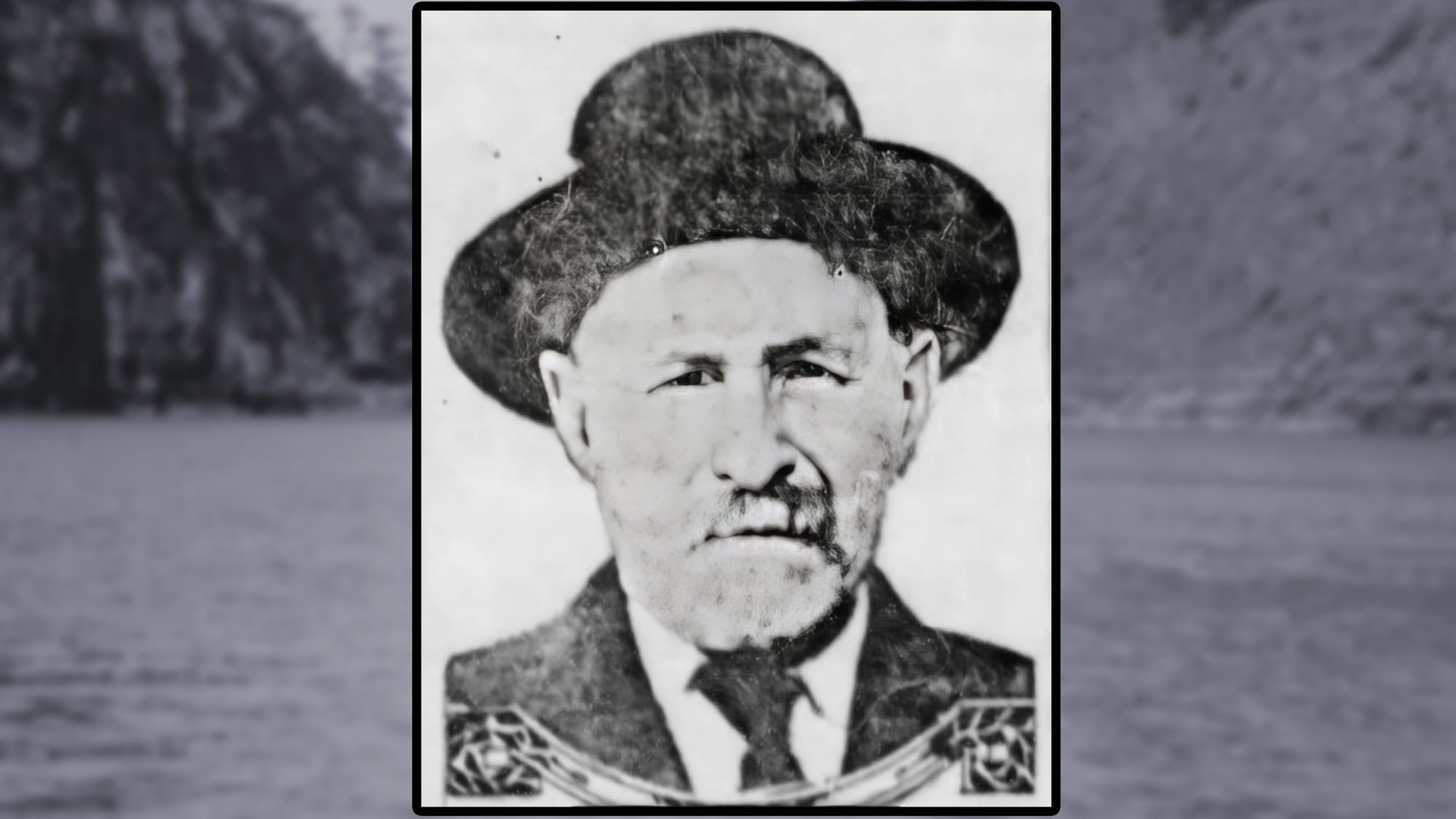
A master of the game was a Confederate veteran who swore he’d never do an honest day’s work for the Union after the war, and he never did. Lawrence “Larry” Kelly moved to the region in the 1870s and started a more than 25-year smuggling career. His bases of operation included Sinclair and Guemes Islands in the San Juans, the latter has a Kelly’s Point marking where he launched his smuggling activities. Despite multiple arrests and, escapes—including one from McNeil Island federal prison in 1886– his career lasted well into his seventies. Newspapers called Kelly the “King of the Smugglers.”
Opium was legal to use in Washington and BC at the time, but the U.S. put heavy duties on it, doubling the price. To circumvent the tariffs Kelly and others snuck smokeable opium, refined in Victoria, across the border, bound for ready buyers and distributors in Port Townsend, Bellingham, Seattle, Tacoma, Everett, Olympia, Astoria, and Portland.
Kelly was also known for being paid to smuggle Chinese men into the U.S. where they were banned but desired as part of the labor force. It was said he had boats specially fitted to hide human cargo. If about to be caught by government agents, he could dump these men into the sea to sink them forever. A horrific story circulated that Kelly once threw overboard 13 men in the Strait of Juan de Fuca when the wind died and he knew his sloop couldn’t outrun an approaching U.S. revenue cutter. It wasn’t proven but such stories persisted and gave his image the coloring of a ruthless Blackbeard.
Kelly wasn’t alone.
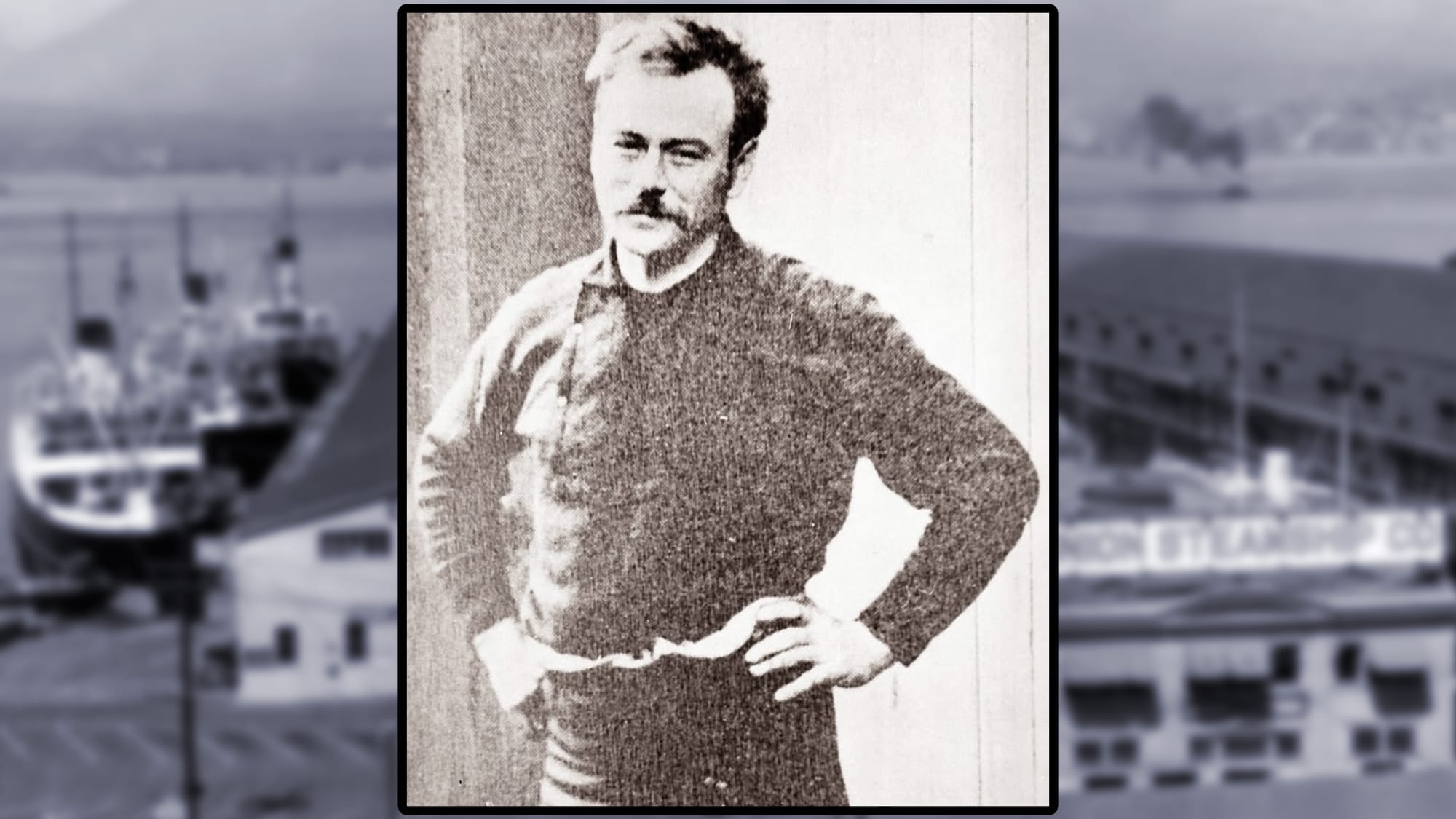
There was Henry Ferguson, aka “The Flying Dutchman,” –also known as Henry Wagner in Canada--who one newspaper called the “terror of [the] islands of Puget Sound.” He was said to have once been a member of the notorious Hole-in-the-Wall Gang of Butch Cassidy fame, which he denied. He was wanted in Utah for train robbery. He came West and started a seagoing crime spree. He was an intimidating figure. A wanted poster described him as having eyes of steel gray, bowed legs, and carring a 44-calibre Colt revolver and a double-barreled shotgun.
Ferguson admitted to smuggling opium, an estimated 9,000 pounds of it. But he was more notorious for hijacking cargoes from small trading vessels. He also robbed banks at gunpoint in BC. He robbed a post office on Whidbey Island--twice! He stole a shipload of oats—yes oats– from a warehouse in Stanwood. He was caught in a 1901 shootout at his Whidbey Island hideout and did a stint at the state pen in Walla Walla.
His sprees came to an end when he was caught while burglarizing a general store at the coal port of Union Bay on Vancouver Island where he was accused of shooting and killing a constable. He was convicted and was hanged in Nanaimo in the summer of 1913.
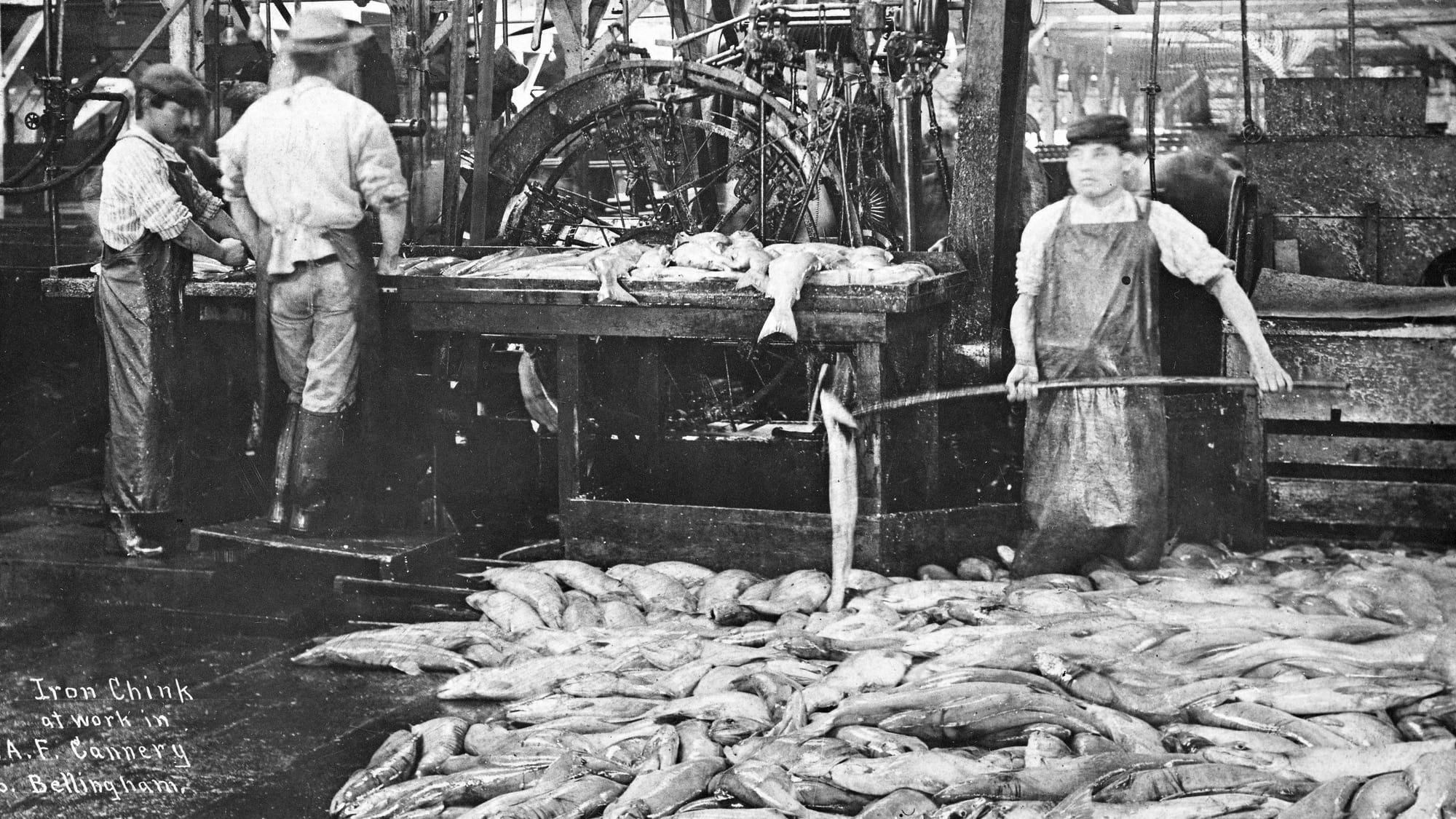
Perhaps the most lucrative and prevalent acts of piracy involved an unexpected commodity: salmon. The salmon canning industry moved from the Columbia River to Puget Sound in the late 1800s and fishing was little regulated and took on an industrial scale. Enormous runs of fish came through the Salish Sea and many were caught by giant trap nets—permanent fixtures that funneled running salmon by the millions into nets. At places like Point Roberts, Lummi and Whidbey Islands, and Boundary Bay fishers—legal and illegal--were essentially strip-mining the resource. Many of the traps were run by the canneries, but there were independent operators too.
But the huge nets of fish proved to be easy pickings. When trap nets were full, an enterprising fish pirate would come along on a dark and choppy night and help themselves to the captive fish. Sometimes, they bribed watchmen, if there were any. Buyers were easy to find. If, say, salmon were selling for 75 cents apiece, a quick nightly raid on a trap net could easily yield 2,000 salmon. That was an easy $1,500 in turn-of-the-century money. Eager fish buyers would meet the pirates off-shore. The fish, taken alive from the nets, were often fresher than salmon available from local fishing boats, so off-loading the stolen salmon was easy. Dealers rarely questioned the source since the fish, unlike cattle, weren’t branded.
Some of the thieves didn’t have to hide. Expert salmon thief Bert “Spider” Jones told an interviewer, “Everybody in Anacortes called me ‘Fish Pirate Jones.’ I didn’t care what they called me just so I was making money.” He did so on nightly trap raids.
As time went on fish pirates got bolder. They could attack Canadian nets and hide in the U.S., or vice versa. As trap owners increased security, some fish pirates operated in armed gangs. A large pirate raid in 1909 at Point Roberts was said to have liberated $10,000 worth of sockeye at gunpoint. In 1910, a sheriff’s raid made arrests of a gang that was said to have taken $30,000 worth of fish—about $1 million in today’s dollars. Talk about scaling up!
The second decade of the 1900s brought about a sea-change for Puget pirates. Smokeable opium was eventually banned in the U.S. and Canada, and illicit immigration declined. Overfishing damaged the salmon runs and a ban on traps eliminated piracy’s fast-money and easy pickings. Rumrunning later boomed with Prohibition, but the wild west period of piracy was over.
