


If you’re old enough to remember pre-digital departure boards at airports and railway stations, you’ll recall the pleasant rushing sound that occurred as new destination information fell into place. The gentle tack-tack-tack of each black flap was so aurally enticing (ASMR, in internet parlance), even as the pace slowed and each half of each letter and number landed in its proper place. Tack-tack-tack… tack…… tack.
Song Cycle (through Jan. 9, 2028), a new installation in the Seattle Art Museum lobby, plays on the pleasures of these “split-flap displays” by presenting one tailor-made for accidental poetry. Created by Petaluma-based musician and designer Chris Kallmyer, the kinetic sculpture features a 256-character sign placed high on the wall, as if at a transportation hub. And the piece does indeed transport the viewer, by way of randomized “text constellations” that form ever-changing poems about sound.
When I walked in, the sign read:
WAKING FROM A DREAM I HEAR THE
DISTANT SOUND OF
JOHN CAGE
AND I’M NOT SURE IF I’M REALLY AWAKE
I sat with that idea (enjoying the Seattle connection) for 10-15 seconds and then tack-tack-tack “John Cage” was replaced with “free jazz.” Another tack-tack-tack revealed “Kool and the Gang,” and another, “mariachi.” With each new cue I heard different music in my head, accompanied by the whirring churn of the flaps.
After several iterations of this poem, all of the letters changed with a hugely satisfying rush that sounded like a symphony of rainsticks. Next up:
AT 5PM I CAN HEAR MY NEIGHBORS
FROM OVER THE FENCE BLASTING
1990S DANCE FLOOR HITS
AND KICKIN’ IT AFTER A LONG DAY
AT WORK
Soon the “1990s dance floor hits” were replaced by “the Windows start-up sound,” then “Wolfgang Mozart” and “ambient music” — each new option prompting a newly imagined audio scenario. Soon the whole board shifted again tack-tack-tack (ahhh) and began a several-panel poem about Cher and her various incarnations.
“I love this,” a stranger standing near me said aloud. At my other side, a young girl was similarly entranced, as her mother tried in vain to entice her up the escalator. I too found I didn’t want to step away from the Song Cycle, intrigued by both what might come next and by the soothing brain-wash of the shuffling split flaps.
Originally commissioned by the Los Angeles Philharmonic and installed in the lobby of the Frank Gehry-designed Walt Disney Concert Hall, the piece offers a multitude of surprising sonic destinations — mental departures that feel especially necessary in these worrisome days.
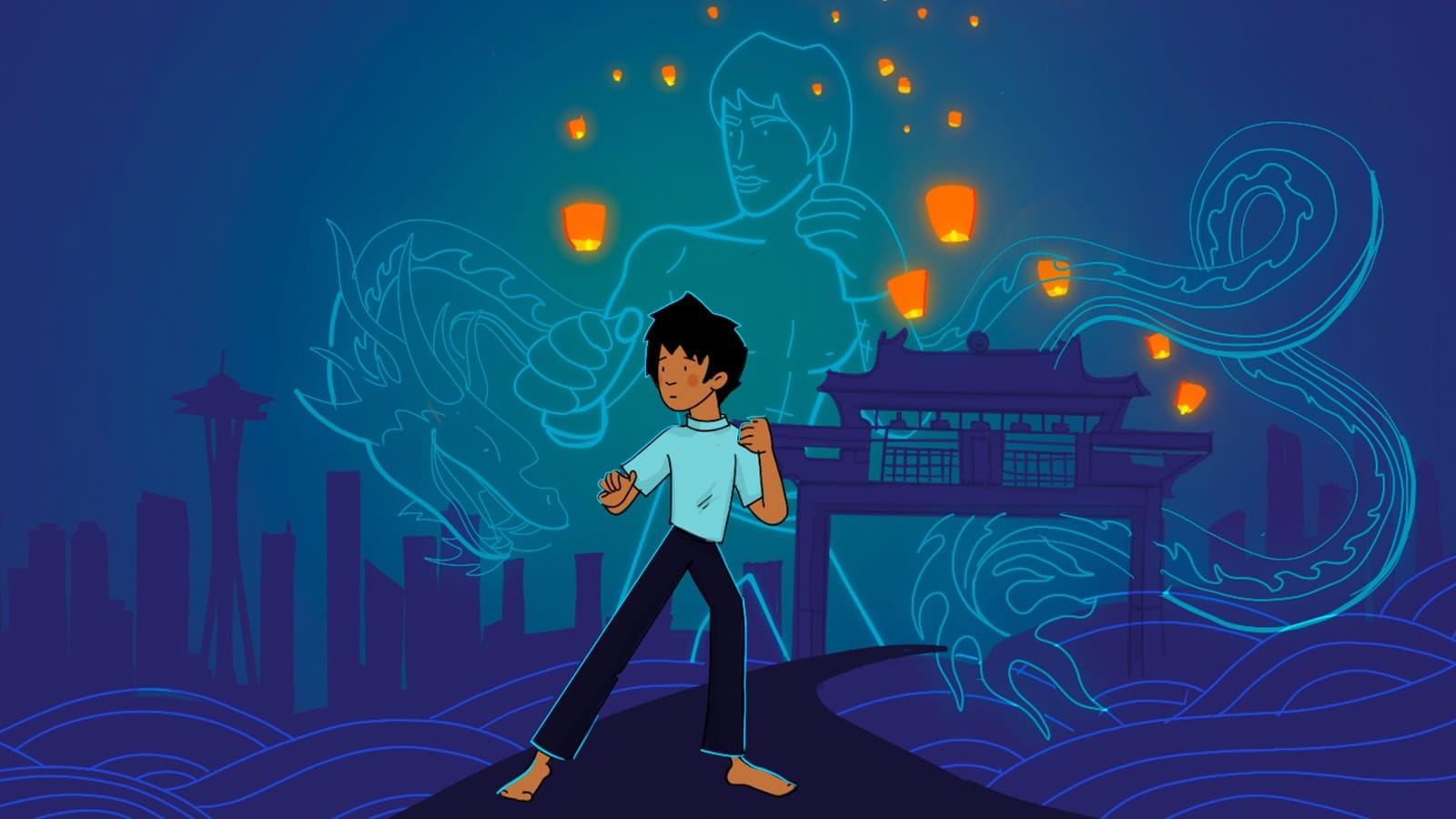
President Trump’s board takeover and renaming of the Kennedy Center hit home this week, as Seattle Children’s Theatre made the financially daunting decision to pull out of a planned two-week performance at the formerly esteemed Washington D.C. venue.
Co-commissioned by SCT and the Kennedy Center and in development for the past two years, Young Dragon: A Bruce Lee Story was inspired by Lee’s life as a young immigrant in Seattle. Written by acclaimed Seattle playwright Keiko Green, the play will run at SCT’s Seattle Center venue February 19 through March 15, and was scheduled to pack up for a run at the Kennedy Center in April.
But this week SCT managing director Kevin Malgesini said in a statement that “the landscape in which the Young Dragon was originally created has changed,” so much so that after careful consideration the organization decided “this is not the right time to transfer a SCT production to the Kennedy Center.” Bruce Lee’s daughter Shannon Lee added that while the circumstances are unfortunate, “I fully support SCT’s commitment to the spirit of my father’s legacy of courageous action.”
In an interview with KUOW, playwright Green said she stands behind SCT’s decision while also registering a philosophical concern, given that her play contains themes of activism and social justice: “Are we silencing ourselves to make a larger point?” It’s a good question, and one of the many complicated issues facing artists in the current climate. But of immediate concern for SCT is how to replace the income — including for performance salaries — that would’ve come from the Kennedy Center run.
All of which feels like a call to action: Get out and support live performance in Seattle (see below).
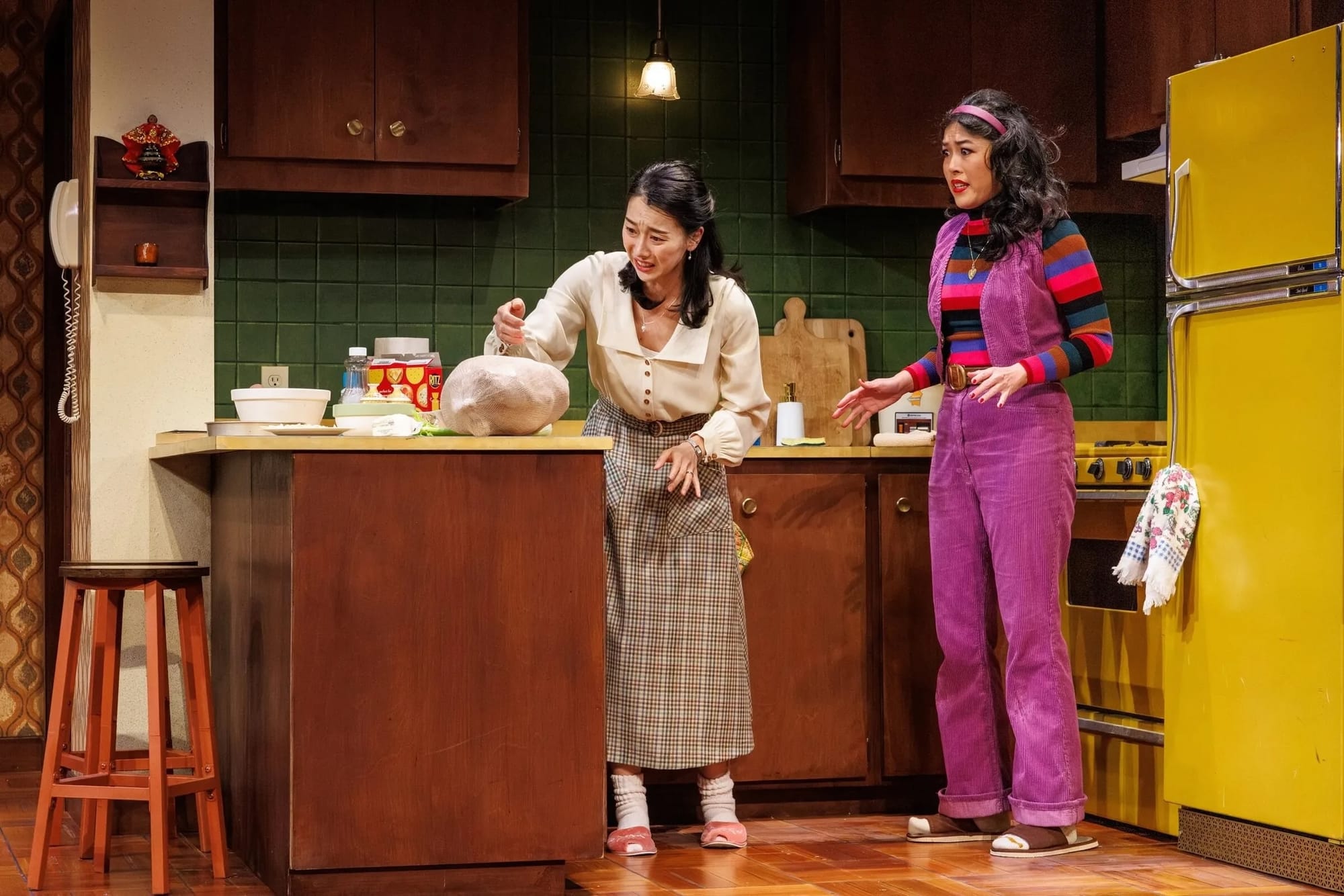
Local stages are currently packed with performances, several of which feel particularly timely. Consider The Heart Sellers, at Seattle Rep (through Feb. 1), playwright Lloyd Suh’s bittersweet story of two immigrant women — one from Korea, the other the Philippines — who together work to puzzle out 1970s America while their husbands toil as residents at the same hospital. Funny, poignant and politically relevant, it’s no wonder the play was one of the most-produced in the 2025-2026 season.
See also (or rather, get on the waiting list for) the sold-out performance of Art from Ashes (Jan. 26 at Benaroya Hall) by Seattle group Music of Remembrance, which uses orchestral music to honor “the resilience of all people excluded or persecuted for their faith, ethnicity, gender or sexuality.” This annual concert commemorates Holocaust Remembrance Day with the Northwest Boy Choir singing songs based on Vedem, a secret magazine in which young men imprisoned at the Terezín concentration camp shared poems and stories.
Also at Seattle Rep is the just-opened Here There Are Blueberries (through Feb. 21), a multiple award-winning “documentary play” and “gripping exposé” based on the real-life 2007 discovery of a Nazi-era photo album that reveals SS officers relaxing and enjoying leisure time. Penned by Moisés Kaufman and Amanda Gronich, the play shines a spotlight on human complicity.
Another option: Move out of your mind into your body with several dance performances:
> Shadow Cities, by Ephrat Asherie Dance with Arturo O’Farrill (Jan. 29-31 at Meany Hall), features club-style contemporary dance with live Latin jazz.
> Major, by Ogemdi Ude (Jan. 29-31 at On the Boards), is an exuberant exploration of majorette dance forms rooted in Historically Black Colleges and Universities and performed here by six Black femmes.
> Winter ‘26 (Jan. 23-24 at Cornish Playhouse at Seattle Center), by Seattle’s Whim W’Him contemporary dance company, features three new works by choreographers FLOCK, Emilie Leriche and Olivier Wevers.
Don’t miss Season 2 of Art by Northwest, featuring in-depth interviews with the printmakers, painters, sculptors, carvers and photographers who are creating captivating work across Washington state.
