


It’s the first unofficial weekend of summer and lots of folks will be traveling, but if you’re sticking around town over Memorial Day you might consider taking a trip back in time. Destination: a place where yellow go-go boots, paper cocktail dresses and clear-plastic bubble hats were the height of in-flight fashion.
The Museum of Flight’s new exhibit Runway to Runway: Styles and Stories of Flight Attendant Fashions (through Jan. 18, 2027) is a decidedly fun foray through airline couture — mostly from the 1960s and ’70s, when designers were going a little bonkers.
You’re reading Art x NW, a weekly arts and culture newsletter from Cascade PBS. Read past issues and subscribe for more.
See Emilio Pucci’s 1971 design for Braniff attendants, a vision in swirling pink-and-green rayon with matching umbrella. Pucci also designed a Jetsons-style “RainDome” — basically a big plastic bowl for your head — to keep attendants’ hats and hairstyles dry on the tarmac (before jetways were enclosed).
For its Foreign Accent collection in 1968, TWA issued a crinkly gold-paper “French Mini Dress,” designed by Elisa Daggs and intended to be thrown away after every use. (The dress tag warns that washing would make it highly flammable.) Also included in this paper line: an “English Serving Wench” uniform. Thanks to attendant complaints — such as the fact that they spent a lot of time taping these outfits back together mid-service — the Foreign Accent collection was jettisoned after nine months.
TWA made a smarter choice in 1971, when they enlisted none other than Valentino to create a gorgeous plum suit with a sleek matching scarf. In fact the exhibit includes a vitrine devoted to the many artful silk scarves issued with uniforms (as well as Northwest Airlines’ possibly ill-advised mink stole). A personal favorite scarf, conceived by Hollywood costume designer Jean Louis, depicts the flight routes of United Airlines on an abstracted U.S. map.
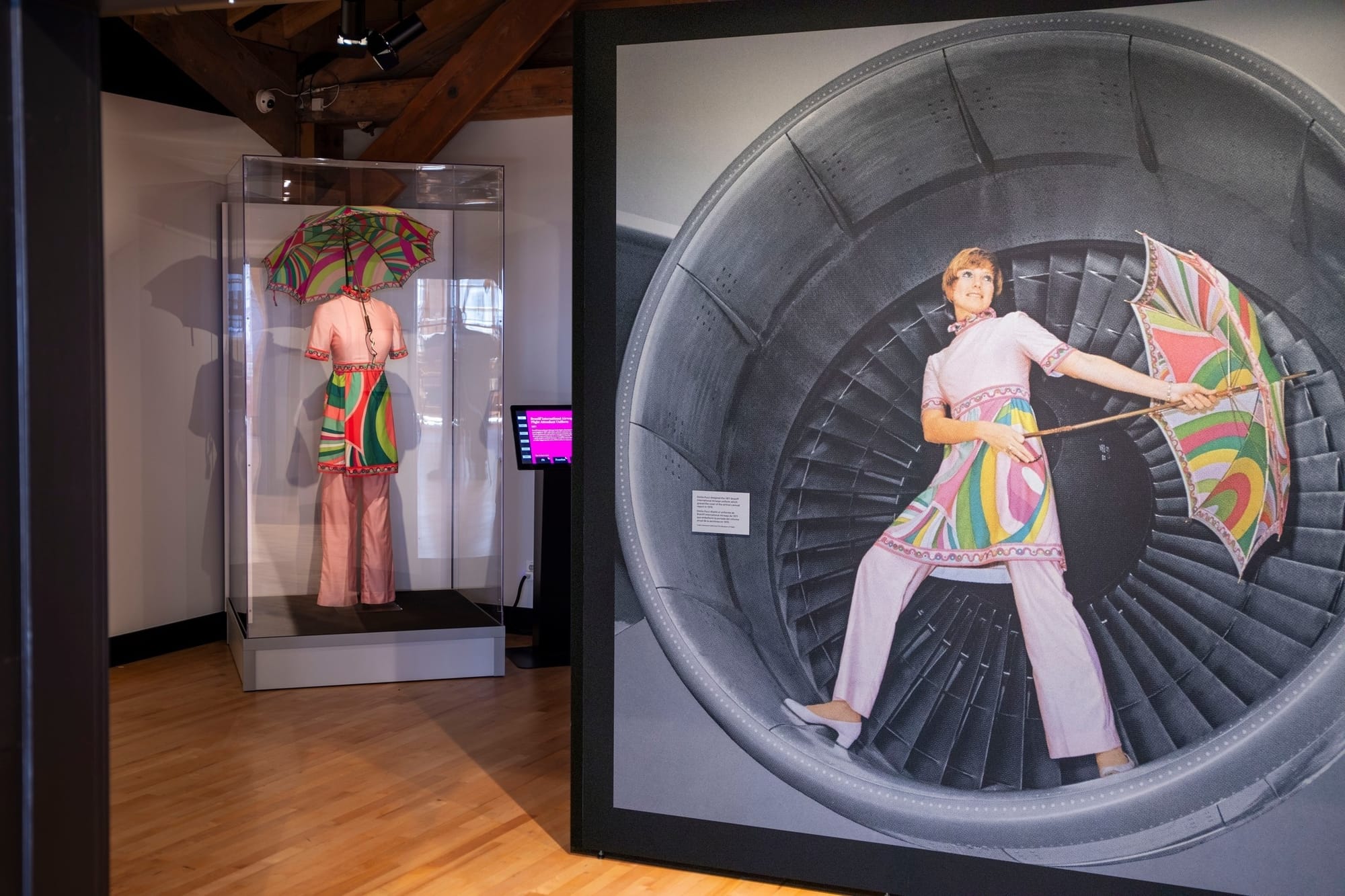
What grounds these sometimes kooky uniforms is the workplace history sewn into the details. I highly recommend clicking through the interactive descriptions, which illuminate the sexist realities flight attendants faced even beyond the often deliberately “sexy” getups.
For years, only single white females of a certain weight could apply (with “girdle firm and fitted,” according to a TWA appearance standards guide), until groups like Stewardesses for Women’s Rights united for workplace equity and protections. Workers continued to fight race and age discrimination under Title VII of the Civil Rights Act.
The first wave of Black employees included Louise Greenwood Phipps, the first African American flight attendant for United Airlines, who was fired in 1967 after getting engaged. When male attendants were invited on board (prompting a pivot from the “stewardess” job title) they faced turbulence too, especially during the AIDS era. And the in-flight challenges continue, from pandemic health fears to unruly passengers.
There’s a lot to see in this show — once your eyes adjust to the lighting, dimmed like a red-eye cabin to protect the vintage fabrics — with more than 100 artifacts, including uniforms, flight bags and a flock of kicky hats. But the wealth of real-life flight-attendant stories and the reality of the workers’ labor struggles give the exhibit necessary ballast.
Bonus miles: If you exit through the gift shop, check out longtime Seattle bag designer Crystalyn Kae’s groovy line of purses made from vintage 1970s Boeing upholstery.
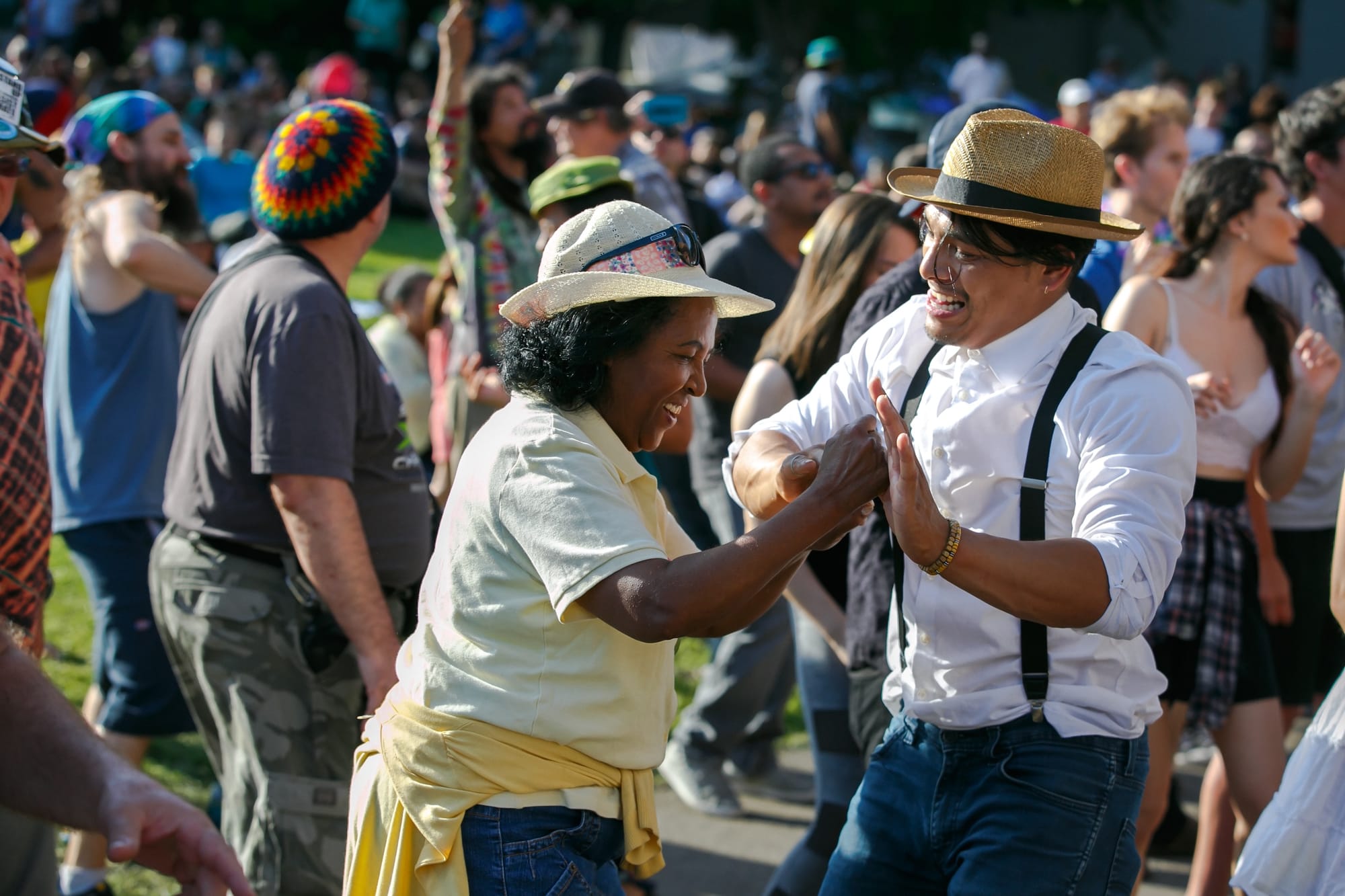
If it’s Memorial Day Weekend it’s Northwest Folklife Festival weekend, now in its 55th year. And it’s still, rather amazingly, free.
The best way to do Folklife is to drift in — overthinking is antithetical to the fest’s hippie origins and joy-in-discovery vibes. The music styles hail from all over the globe and the dance is just as diverse: Step around a corner and you might find a Hungarian folkdance ensemble, a Seattle breakdancing demo, an Indigenous dance showcase or enthusiastic cloggers. Consider this your call to escape the Spotify algorithm and let chance (and dance) encounters guide your musical choices for a day. Seattle Center, May 22-25, times vary.
And few more ways to keep your ears and minds open to music in the coming days:
< Bach and Pancakes is the classical-meets-carbs combo you never knew you needed. Invented by Seattle marimba player and music curator Erin Jorgensen, this highly informal, easy like Sunday morning, all-ages event features talented local musicians playing their takes on the music of J.S. Bach. This installment’s robust roster includes Rose Bellini on cello, Tomo Nakayama on voice and guitar and The Half Brothers bluegrass trio. Plus stacks of fresh flapjacks and coffee. Kenyon Hall in West Seattle, May 24, 10 a.m. - 12 p.m.
< Next weekend, Seattle Symphony music director Xian Zhang conducts the orchestra in the music of George Gershwin. Reveling in the legendary composer’s Jazz Age genius, Xian will lead listeners through his Piano Concerto in F (with pianist Hélène Grimaud); Porgy and Bess: A Symphonic Picture and An American in Paris. Benaroya Hall, May 29-31, times vary.
< Orquesta Northwest presents its spring concert, A Celebration of Community. This acclaimed local ensemble, directed by Paula Madrigal, performs a variety of music from Mexican and Spanish traditions. Expect to hear sounds spanning classical, mariachi and flamenco from groups including the Ballard Civic Orchestra and the locally rooted World Youth Orchestra. Town Hall Seattle, May 31, cultural fair at 1 p.m., concert at 2 p.m.
< With Hidden and Forbidden: The World of the Medieval Cantrix, Seattle’s Medieval Women’s Choir (yes of course we have one) takes on the cloistered patriarchy. It seems that medieval men didn’t care much for religious women serving as cantrices (teachers of liturgical chants and songs) — because their singing might inspire lascivious thoughts. Wonder where they got that idea? The cantrices persisted in secret, and the choir will share some of the surviving traditions. St. James Cathedral, May 30, 8 p.m.
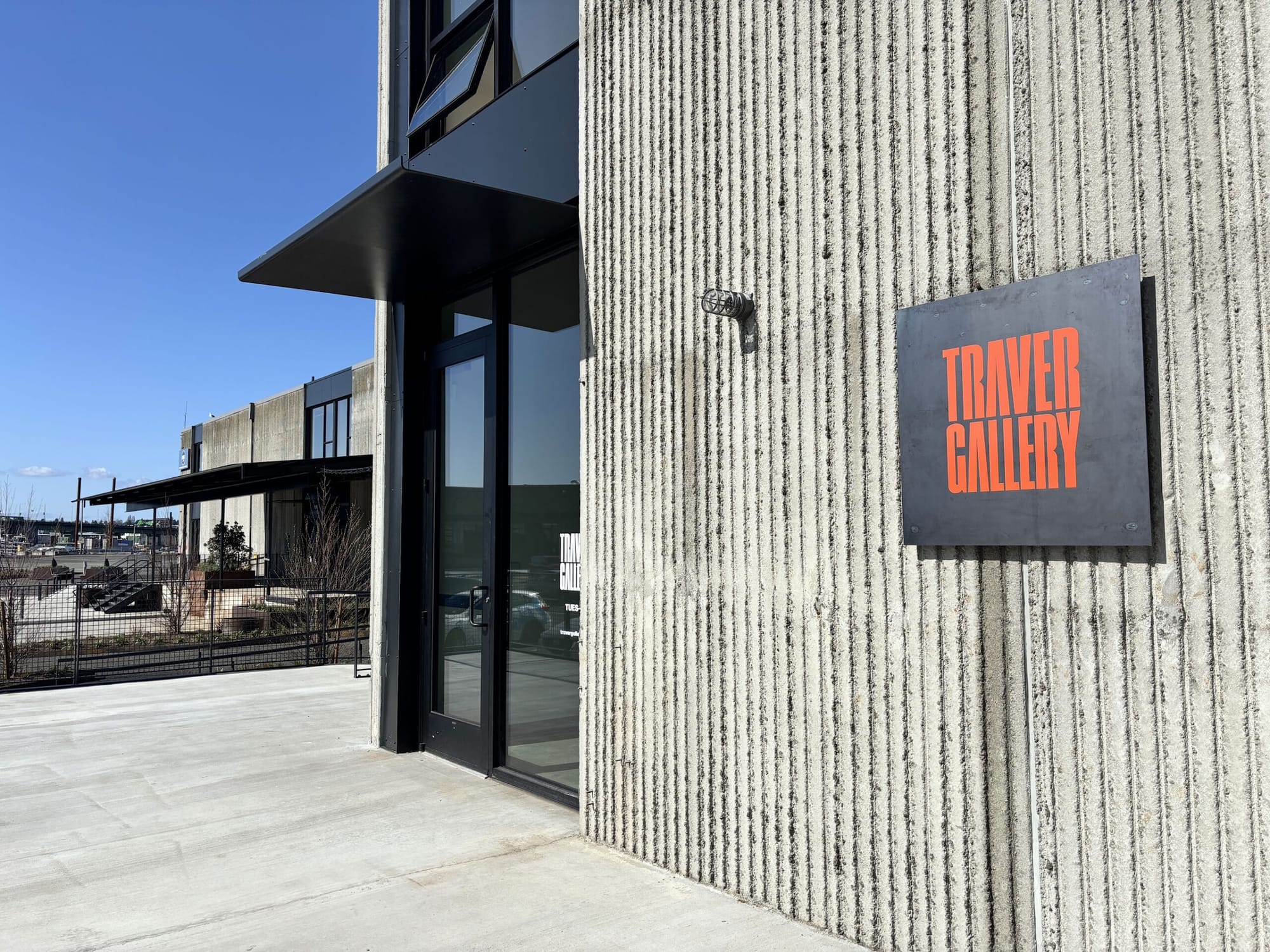
Finally, this just in: Several prominent local galleries are gathering to produce a new art fair this summer, called Assembly Art Fair (July 22-26). Founded by the teams at Traver Gallery and Greg Kucera Gallery, the event is billed as an “intentionally small alternative to the conventional fair” and will be held at the swanky new West Canal Yards (the complex where Traver Gallery relocated last year).
If those dates look familiar, yes, it will run concurrently with the massive Seattle Art Fair (Lumen Field Event Center, July 23-26). But apparently there won’t be any West Side Story-style rumbles — the new fair has the support of the old fair. So far, other local galleries on board include J. Rinehart, Foster/White, studio e and AMcE.
The West Canal Yards building — a former fish cannery — is very cool, by the way, with huge windows, big ole Northwest beams and a waterside deck. It will serve as a striking counterpoint to the sea of booths at the Paul Allen-founded Seattle Art Fair. Stay tuned for more news on the Assembly Art Fair front.
Check out Season 2 of our tv show Art by Northwest, featuring in-depth interviews with the printmakers, painters, sculptors, wood carvers and photographers who are creating captivating work across Washington state. Nominated for two Northwest Regional Emmy Awards.
