
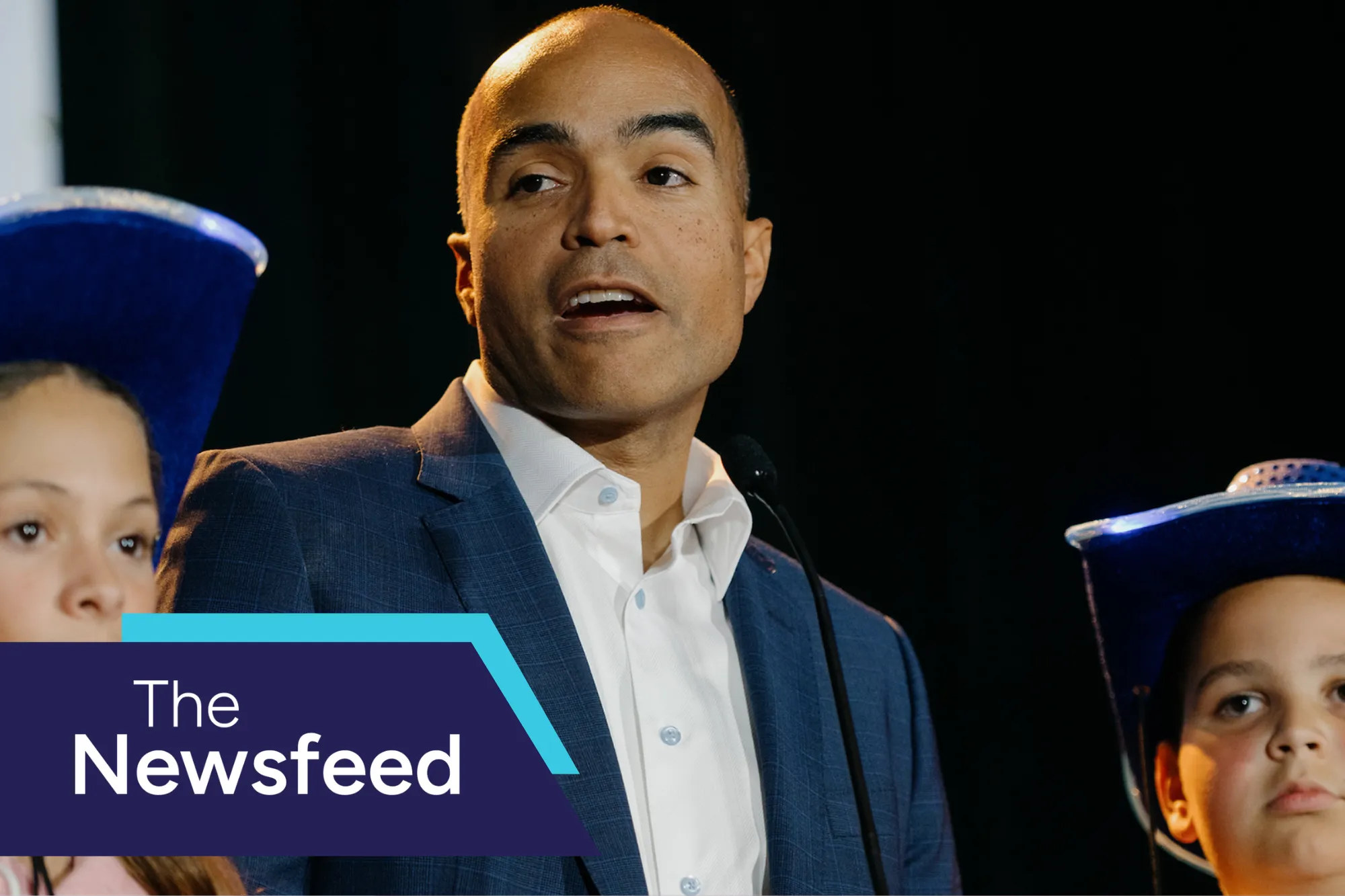


Last week, we sat down with Washington Attorney General Nick Brown for a comprehensive conversation. In the second half of that talk, Brown discussed several topics, including being the first Black Attorney General to helm the state’s office. Before that historic shift, he was also the state’s first Black U.S. Attorney.
“What I think and hope, for me, it represents change. But it also brings a different perspective and a different voice. You know, I'm not interested in being the first Black AG, simply to have a Black AG, but to lend a different voice to the work that we're doing, and also giving the people that we serve the different sort of, accountability and access to the office,” he said.
“I understand that me being there gives me a rare opportunity to directly channel the voices of Black community, brown community, underrepresented populations across the state. And I'm really excited about what that means for the second and the third... and that legacy.”
Brown started his career as an Army lawyer in uniform. He later worked for many years for the Department of Justice. He reflected on a moment, he says he won’t forget, while working in the nation’s capital.
“You know, one of the most memorable moments in my life, was when I was serving as U.S. Attorney. I think .. you know we have been in every federal building they have a picture of the President on the wall, and whatever the agency head is for that agency. When I worked for the Department of Justice, when I started, there's a picture of George Bush, President Bush, and his U.S. Attorney, Federal U.S. Attorney. And, I remember the first time I noticed when they changed the portraits to Barack Obama and Eric Holder. And it, really it, literally stopped me in my tracks,” Brown said.
“Because it was the first time in my life that I had seen people and reported to people who looked like me, who understood a little bit more about my history. And that was, you know, a professionally and personally market moment that I will never forget.”
Now, about a decade past the Obama years and in a much different nation, Brown’s Office has levied more than 45 lawsuits against the federal government. One of the first cases was in response to President Donald Trump’s executive order to end birthright citizenship.
“First and foremost, the President himself does not get to decide who in America who is an American. That is not what our Constitution says. That is not the power that he bestows. And what he is trying to do is simply redefine what it means to be American based on his own decision, and not the decision of the people of the United States through their representatives. If we want to change the process of what it means to be American, how you become an American, then there's a process for that. That's a constitutional amendment.”
Brown says the process requires states to agree to change the Constitution.
“But he simply took out a Sharpie and wrote an executive order to try to control, you know, really the quintessential final question of our country. And, so at a foundational level it's about balancing that power back to the people and to the states,” he said.
“But at a more important level, it's about, you know, continuing our precedent that has been affirmed by the Supreme Court time and time again. That if you're born on American soil, with very few exceptions, then you’re an American. And that has brought this country the diversity that we have. It has made us a unique democracy in this world.”
Despite the weight of what’s before Brown, from tackling the state’s complex challenges related to affordability, environmental protection, and workers’ rights – he appears to be taking it in stride. We asked: what gives him hope?
“I think we confuse optimism and hope a lot right. Optimism, is the sort of naive belief that things will just get better. Hope is that, with action. And I remain hopeful because I have seen the impact of our work,” he said.
“I have seen how lawyers, and investigators, and professional staff, can make people's lives better. You know, we are one part of what I think is needed to continue to try to make Washington better.”

