

Last week, Three Dollar Bill Cinema announced that the Seattle Queer Film Festival and TRANSlations Film Fest will be taking an indefinite hiatus this year to recalibrate and deal with financial issues. Woof. As a film lover, it’s always difficult to hear about film organizations struggling amidst the age of streaming. So much of what makes cinema thrilling is the experience of seeing a movie with a bunch of strangers. That being said, there are many opportunities to do so this week:
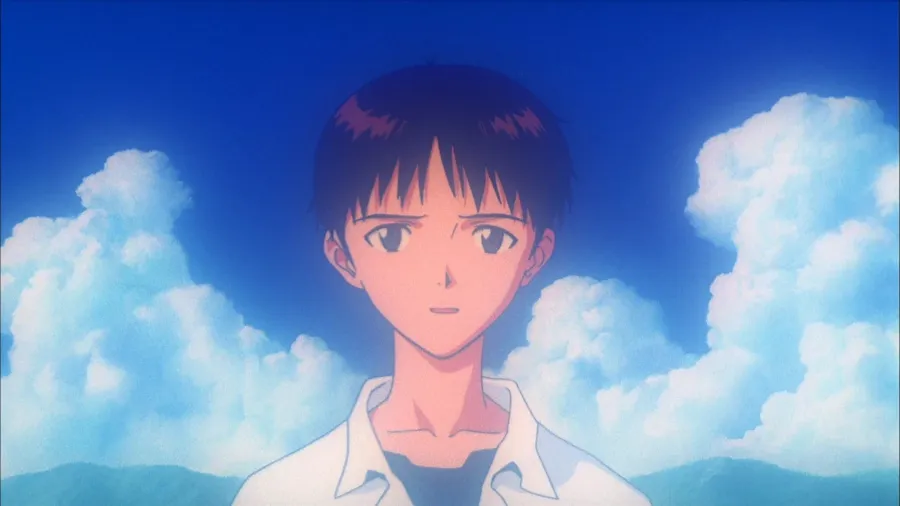
< If you’ve been putting off getting into the anime oeuvre, here’s your chance to increase your understanding — and your list of faves. SIFF and Sea Slug Animation have teamed up for the Ani-Marathon (April 17-30), a two-week marathon of anime films at SIFF Cinema Downtown. Even if you’ve already seen anime classics like Ghost in the Shell and The End of Evangelion, watching them on the big screen will take your viewing experience to a different level. (P.S. You really need to see the new 4K restoration of Angel’s Egg on April 18 — it’s been unavailable for ages!)
You’re reading Art x NW, a weekly arts and culture newsletter from Cascade PBS. Read past issues and subscribe for more.
< Happy National Poetry Month! Expand your poetry consumption into visuals at Northwest Film Forum’s annual Cadence Video Poetry Festival (April 17-19). Screenings include video poems about time, space and collective memory. Participants will also have opportunities to meet and learn from filmmakers/poets at workshops and meetups both IRL and online.
< During this transition from the depths of winter to the mossy newness of spring, looking at art inspired by the Pacific Northwest will get us through. The Seattle Art Museum is screening three short documentaries (April 25) about famed Seattle modernist painter Mark Tobey in conjunction with the sprawling Beyond Mysticism exhibition. These short films — made in the mid-century — follow Tobey on walks through Pike Place Market, on travels abroad, and discussing his views on art, life and philosophy.
< For those preferring an at-home film experience, Scarecrow Video’s film discussion series, Scarecrow Academy, is diving headfirst into the Sixties on Film this spring. (Disclaimer: I’m a video librarian at Scarecrow). Tune into upcoming chats about Jean-Luc Godard’s Contempt on April 18 or Richard Lester’s A Hard Day’s Night (a fave!) on April 25. All discussions are hosted on Zoom by National Society of Film Critics member and local film critic Robert Horton. It’s free and open to all, just make sure to register online (and watch the movie in advance!).
PS: SIFF just dropped the line-up for this year’s Seattle International Film Festival (May 7-17), offering even more reasons to get off the couch and watch a movie IRL.
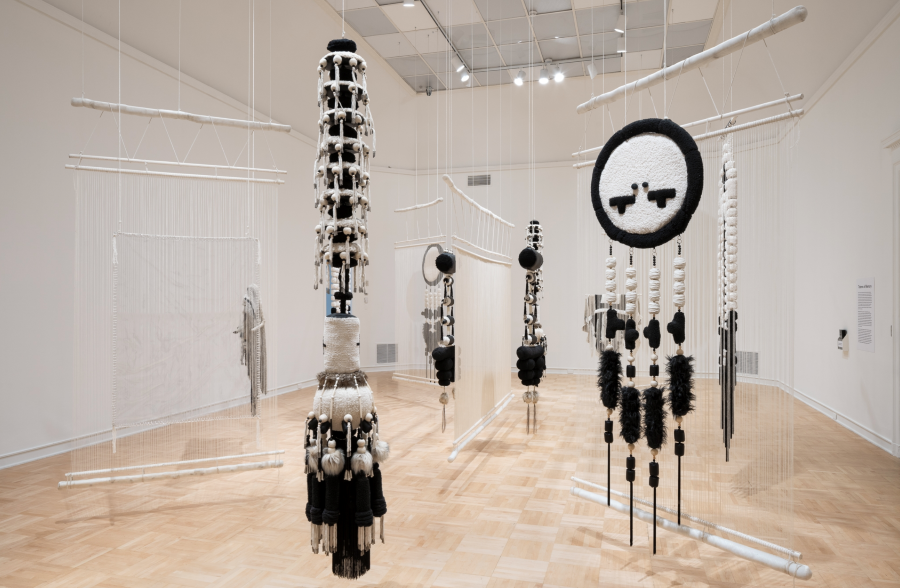
At the press preview for his new show at the Henry Art Gallery, Diné artist Eric-Paul Riege said his grandmother taught him a concept that has carried through his life and work: “As you navigate the world, your jewelry is listening — having the same experiences as you, and holding them.” In this way, even simple adornments become “totems of collective memory.”
The expansive exhibition ojo|-|ólǫ́ (pronounced oh-ho hol-ohn and running through Oct. 25), presents such “totems” in the form of giant jewelry-esque sculptures made from materials including paper, sinew, cotton, deer bone, cat hair, pleather and pool noodles.
In his largest West Coast show to date (created in partnership with The Bell Gallery at Brown University) Riege uses these puffy sculptures, intricately woven textiles and archival items to celebrate the ancestral knowledge held in Indigenous-made objects while also critiquing the role museums play in brokering that knowledge with the public.
During his research phase, Riege consulted the Navajo collections at the Burke Museum and the Haffenreffer Museum of Anthropology at Brown. Some of the objects he studied at the Burke Museum are on display in ojo|-|ólǫ́ alongside personal items from his own house and studio, forming a collage of sorts.
“One of the most exciting things about being a weaver and maker is getting to learn from these objects and the materiality of them,” Riege said in a press release. “ojo|-|ólǫ́ is a celebration of their agency and their lives.”
In one room, viewers are invited to actually touch the sculptures as a means of connecting the history of the material — its cultivation, its processing and its being put on the shelf at the art store — to the present. “If you touch the pieces, you change them,” Riege said at the preview, “and they change you.”
April always feels like the time when arts events spring forth in earnest. And, of course, that means a lot of excellent local artists will be on stages, hanging work in galleries and chatting about their recent books.
< Have you been to Fresh Mochi? Run by Seattle artist Elizabeth Jameson, it’s a cool art gallery nestled into a residential neighborhood on Beacon Hill (more of those, please!). Moga (April 18-19 & 26) features diverse work by six stellar local artists of Japanese heritage — Patti Warashina, Catherine Cross Uehara, Hanako O’Leary, Michelle Kumata, Sakura Davis, Erin Shigaki, and Jameson. Bonus: On April 25, O’Leary is hosting an origami-vulva workshop for all who celebrate.
< If you grew up in the Seattle area, there’s a good chance you got your news from longtime KING 5 anchor Lori Matsukawa. After retiring in 2019, Matsukawa has now collated her experiences in her book, Being There: Memoir of an Asian American Journalist, which officially drops on April 23. That same day at Town Hall, she’ll be in conversation with fellow local news anchor Mimi Gann to discuss her memoir, working-class upbringing and experience as an Asian American woman in journalism.
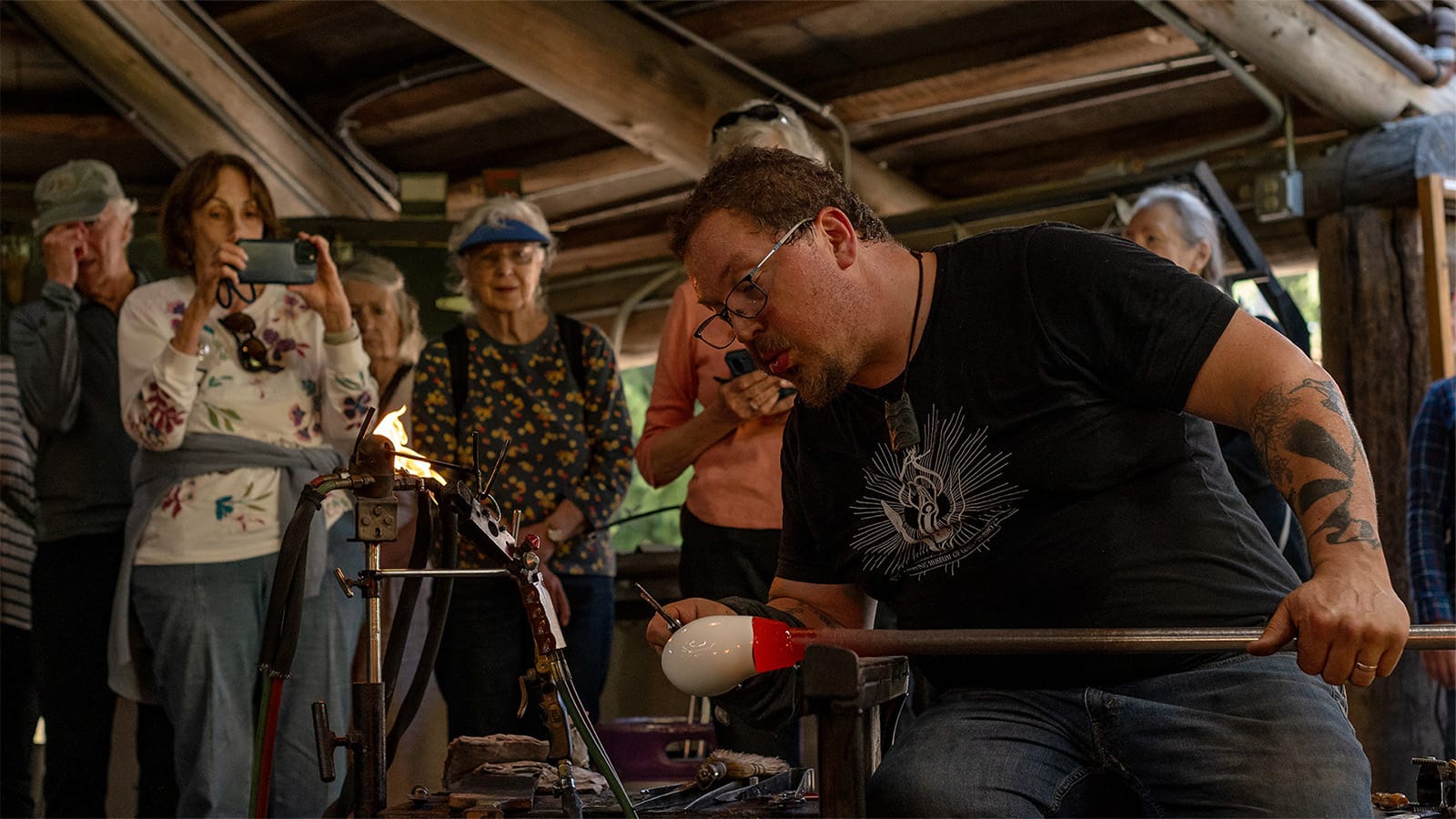
< One of our state's greatest art resources is the Pilchuck Glass School, where the studio glass movement took its baby steps in the 1970s. The institution is inviting visitors to its annual spring tour at the historic Stanwood campus (April 22-25). The tour offers those of us who aren’t glassblowers a rare chance to hike around the school, learn a bit about its history and attend glassblowing demos from Northwest artists like Emmanual Aguilera-Santos, Karen Willenbrink-Johnsen and Jasen Johnson, and Randy Walker. Plus, musician and Black Arts Legacies alum Benjamin Hunter, who will perform on campus.
< It’s a family affair at studio e in Georgetown. The latest exhibition (through May 2) showcases work from three fabulous Feddersens: nieces RYAN! and Carly, and their uncle, Joe Feddersen. From their perspectives as members of the Confederated Tribes of the Colville Reservation (the Okanogan and Arrow Lake bands), each pulls on a different artistic thread, presenting work from various mediums. Carly’s slug bolo ties, RYAN!’s patterned blown-glass vessels, and Joe’s colorful monoprints on paper are all shown alongside one another in an interesting mix of communal and personal artistic exploration.
Check out Season 2 of our tv show Art by Northwest, featuring in-depth interviews with the printmakers, painters, sculptors, carvers and photographers who are creating captivating work across Washington state.
